
La parola ai direttori di gara: tra i campi della RomeCup ai mondiali di calcio Fifa
Something unprecedented is happening on the pitch at the 2026 FIFA World Cup, currently being held across Mexico, the United States and Canada. For the first time in World Cup history, six women make up FIFA’s official refereeing team. Among the 52 female referees selected to officiate the 104 matches of the largest tournament ever organised, two are taking charge from the centre of the pitch: Tori Penso from the US and Katia Itzel García from Mexico. The other four hold roles as assistant referees and VAR officials. For Pierluigi Collina, head of FIFA’s refereeing department, this confirms “a trend that began four years ago with Qatar 2022, with the aim of further promoting women’s refereeing”.
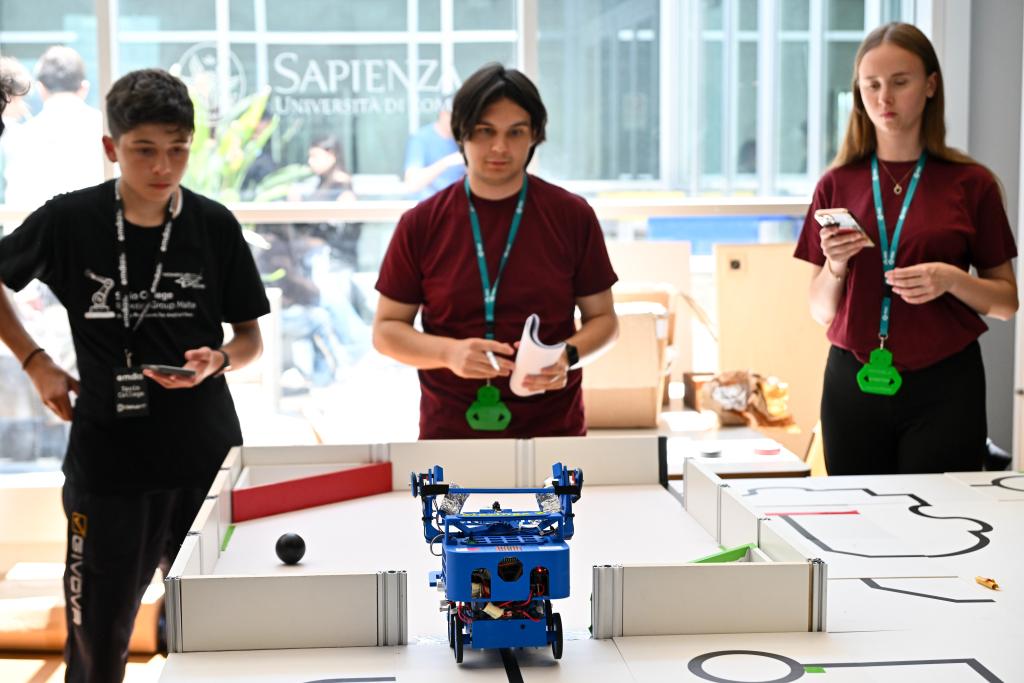
When it comes to robotics and technological innovation, the RomeCup 2026 is now far ahead… The event’s refereeing team not only ensures the rules are upheld, but also serves as a model of gender equality and continuous professional development, where young academics put their skills at the service of the next generation.
Academic excellence and gender representation
The RomeCup 2026 refereeing team stands out for its high-calibre academic profile, drawing on centres of academic excellence such as Sapienza University of Rome and the University of Salerno. The female contingent is central and highly qualified: figures such as Serena, a student of Artificial Intelligence and Robotics, Micaela, studying Computer and Automation Engineering, and Martina, from the University of Salerno, embody the bridging of the gender gap in STEM disciplines. For these young professionals, judging is seen as a major responsibility in terms of assessment and an opportunity to engage with complex projects developed by participants throughout the school year.
Passing the baton: from competitors to judges
A distinctive feature of the 2026 edition is the presence of judges who have previously experienced the RomeCup as participants. This ‘passing of the baton’ ensures a particular sensitivity in the judging process:
- Alessio, a judge in the Soccer category, previously competed in the Rescue Line division, describing his current experience as stimulating and essential for ensuring the rules are followed and the students have fun.
- Lorenzo, a Computer Engineering student and a veteran of the Rescue competitions, emphasises that the role of referee is a way to fairly reward the months of hard work put in by the sixth-formers, regardless of their final placing.
- Serena, although this is her first experience as a judge, has a history as a participant, confirming the intensity that the competition instils in those who commit themselves to it.
Tenacity and team spirit: lessons from the field
The testimonies reveal a deep admiration for the problem-solving skills of these very young participants. Andrea, in his first experience as a judge in the Rescue Line category, recounts an episode emblematic of tenacity: a secondary school team, having realised a serious technical fault, managed to cope with the pressure by rebuilding their robot almost entirely from scratch in just thirty minutes.
This spirit of resilience and goal-orientation is what most impresses the judges, who are often surprised by the operational maturity of such young students.
Finally, the effectiveness of the judging panel lies in its internal cohesion. Martina highlights how collaboration and mutual support among judges from different categories were crucial in overcoming technical and creative challenges, especially during the complex phase of setting up the competition courses.
These young experts demonstrate that expertise and passion know no gender barriers, making RomeCup 2026 a model of fairness and scientific rigour.