
The RomeCup as a driver of educational innovation
The RomeCup has established itself as an ecosystem capable of radically transforming the structure of learning and the very concept of ‘school time’. No longer confined to morning lectures, the school is evolving into a permanent laboratory where theory is integrated with constant, project-based practice that engages pupils throughout the entire school year.
Multidisciplinarity and overcoming compartmentalisation
One of the most significant impacts lies in the generalisation of skills. Robotics requires a synthesis of different disciplines – mechanics, mechatronics, computer science and electronics – encouraging students to move beyond a compartmentalised view of knowledge. This approach fosters the development of an open mindset, enabling young people to acquire cross-disciplinary skills: future computer scientists learn the fundamentals of electronics, whilst mechanical engineers engage with the logic of programming.
The model of the scientific community
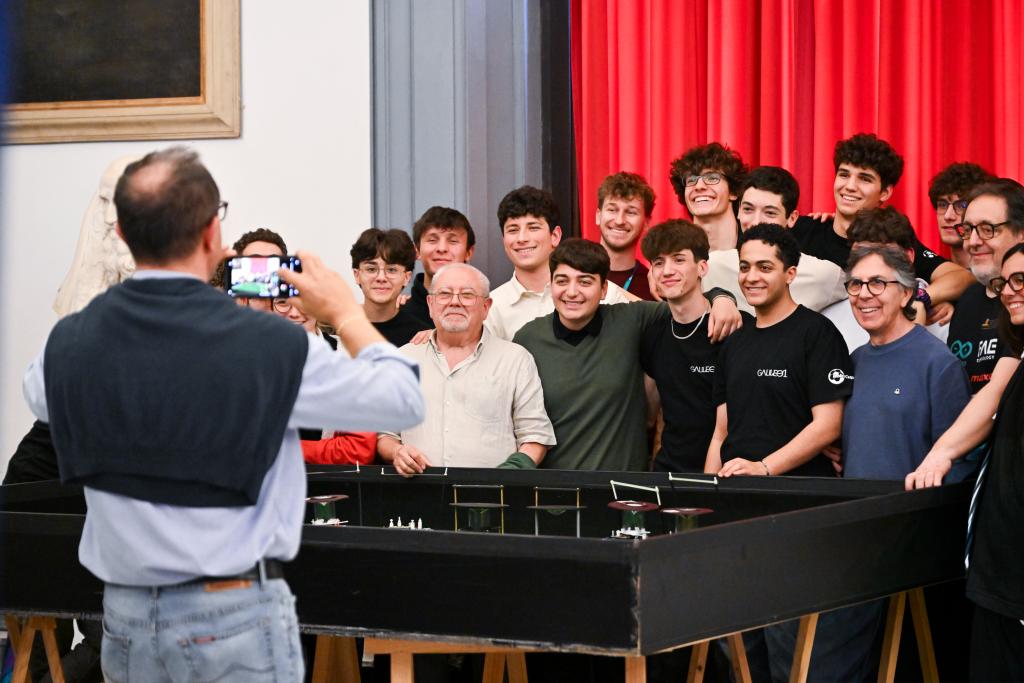
Participation in the event promotes a horizontal organisation of work, which can be defined as a true scientific community. In this context, the relationship between teacher and learner is redefined: knowledge is not imposed but shared and developed collectively, leading to situations where students, thanks to the technical skills they have acquired, actively support teachers in resolving complex issues.
Generational continuity and merit
The strengthening of the sense of community is ensured by a continuous transfer of knowledge. The teams, often made up of students from different years (from second to fifth year), encourage peer learning, further supported by the return of former university students who choose to make their experience available to the new teams. This commitment is often governed by criteria of merit: in some schools, access to afternoon robotics workshops requires passing tests and maintaining excellent academic averages, thereby encouraging responsibility and dedication.
From primary school to advanced specialisation
Methodological innovation encompasses every level of education. In primary schools, projects linked to STEM and 3D printing enable early familiarisation with artificial intelligence through offline search systems such as ‘Chiocciolina’.
In secondary schools, training reaches highly specialised levels, integrating machine learning tools to simulate real-world scenarios, such as fire management through the interaction between drones and rovers.