

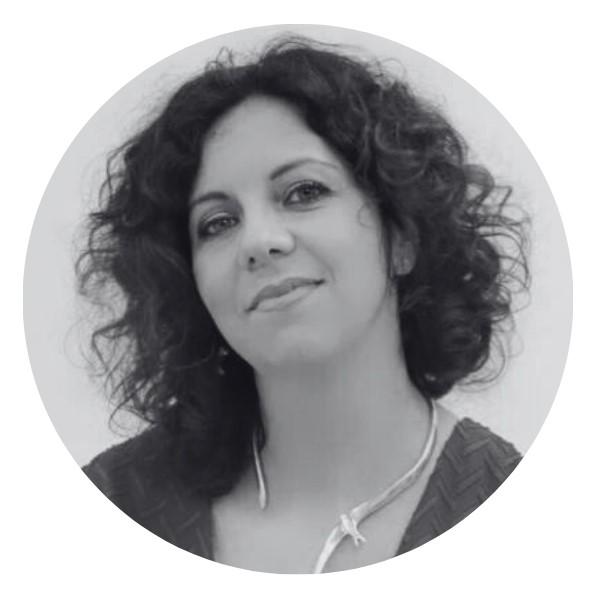
Francesca Fiori Nastro: “Above all, *The Future of Care* has given me a method”
Francesca Fiori Nastro, aged 34, from Naples, studied medicine at the Federico II University of Naples. She chose to become a paediatrician and has been working for three years at the Ospedale Civico in Palermo, in the Neonatal Intensive Care Unit. She cares for both healthy newborns in their first days of life and premature babies or those with more complex conditions requiring intensive care.
Before undertaking the course, she had a mixed relationship with artificial intelligence – curiosity but also fear – “because I was struck by its ability to provide answers in a very short time, which were coherent, plausible and, above all, well-formulated, but I had a constant fear of not having certainty regarding the scientific accuracy of the information I was receiving”.
“The Future of Care has, above all, given me a method, because I’ve realised that it’s not enough simply to ask the tools a question; you also need to know how to ask it properly, provide the right information, and then be able to critically evaluate what the artificial intelligence returns.”
There could be many applications in her field of work, all of them interesting: from drafting discharge letters to the handover between healthcare professionals, “perhaps by drawing up operational checklists, but also to create informative material accessible to all parents, to share information regarding follow-up care, managing the newborn at home, and practical guidance for the first few months of life”.
AI could therefore prove, indirectly, to be a catalyst for better care and a source of support for new families coping with the arrival of a newborn, but also a valuable knowledge tool for clinicians: “In the future, I would like it to become increasingly useful in accessing scientific literature and in continuous professional development, because I believe it can help us spend less time on certain organisational tasks and allow us to devote more time to patient care and relationships with families”.
 Interview by Onelia Onorati, press office of the Fondazione Mondo Digitale.


