

The future of healthcare: artificial intelligence supporting the day-to-day work of clinicians and biotechnologists.
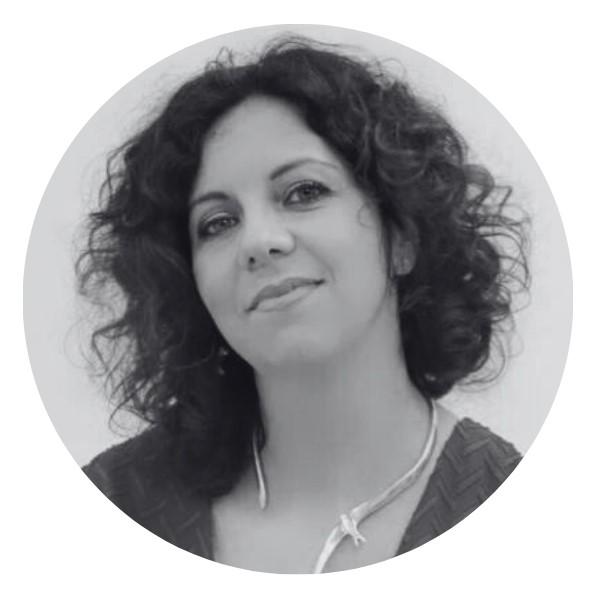
Michela Cudemo, a student on the Master’s degree programme in Medical Biotechnology at the University of Naples Federico II, talks to us about how her relationship with artificial intelligence is evolving after taking part in the The Future of Healthcare programme.
Starting from a fairly basic understanding of artificial intelligence applied in the biomedical field, Michela’s main concern was the reliability and potential biases associated with the outputs, although she considered it an extremely interesting technology capable of speeding up tasks to support professionals and researchers. “I was worried that it might replace the clinician’s judgement when making a diagnosis. I wasn’t aware of what the best way might be to integrate it into a hospital workflow.”
It was precisely to gain a better understanding of how to use AI that Michela undertook the training programme: “It helped me enormously to gain an informed and practical understanding of how to use this tool – not as a substitute for clinicians or researchers, but rather as a support system capable of automating and optimising tasks in administrative and organisational areas in a fully standardised manner, thereby freeing up the healthcare professional’s attention and ensuring better quality of care, whilst improving the overall efficiency of the workflow.
I have also learnt to recognise the limitations: the risk of generating non-existent data or omitting essential information, and the need for human supervision when evaluating clinical decisions. ‘The Future of Care’ has really helped me understand that the value of artificial intelligence depends above all on the rules of use – that is, on the guidelines provided to the tool and on the ability of practitioners to use it critically and responsibly.”
Michela plans to use AI to support her practice, but with a new awareness and focus on verifying the information generated, thereby assessing the operational process and validating the output against reliable and verified sources.
“Artificial intelligence could prove very useful in theanalysis of large quantities of biological data, enabling the rapid identification of biomarkers, therapeutic targets and treatment strategies for each patient, thereby paving the way for the future of precision medicine.
I believe that artificial intelligence has significant potential as a tool to support the interpretation of experimental data, an essential yet time-consuming stage in research. In future, well-validated artificial intelligence systems could also help laboratory scientists and clinicians to integrate information from clinical tests, previous data and medical history to formulate a diagnosis as early as possible, without, however, replacing the decision-making carried out, always and in all cases, by professionals in the field”.
The course provided the knowledge needed to evaluate artificial intelligence critically yet realistically, in order to understand how it can best be integrated into clinical practice and research, supporting both clinicians and laboratory professionals in their daily workflows.
 Interview by Onelia Onorati, press office of the Fondazione Mondo Digitale.


