
At RomeCup 2026: Prototypes for Understanding and Managing Urban Foot Traffic
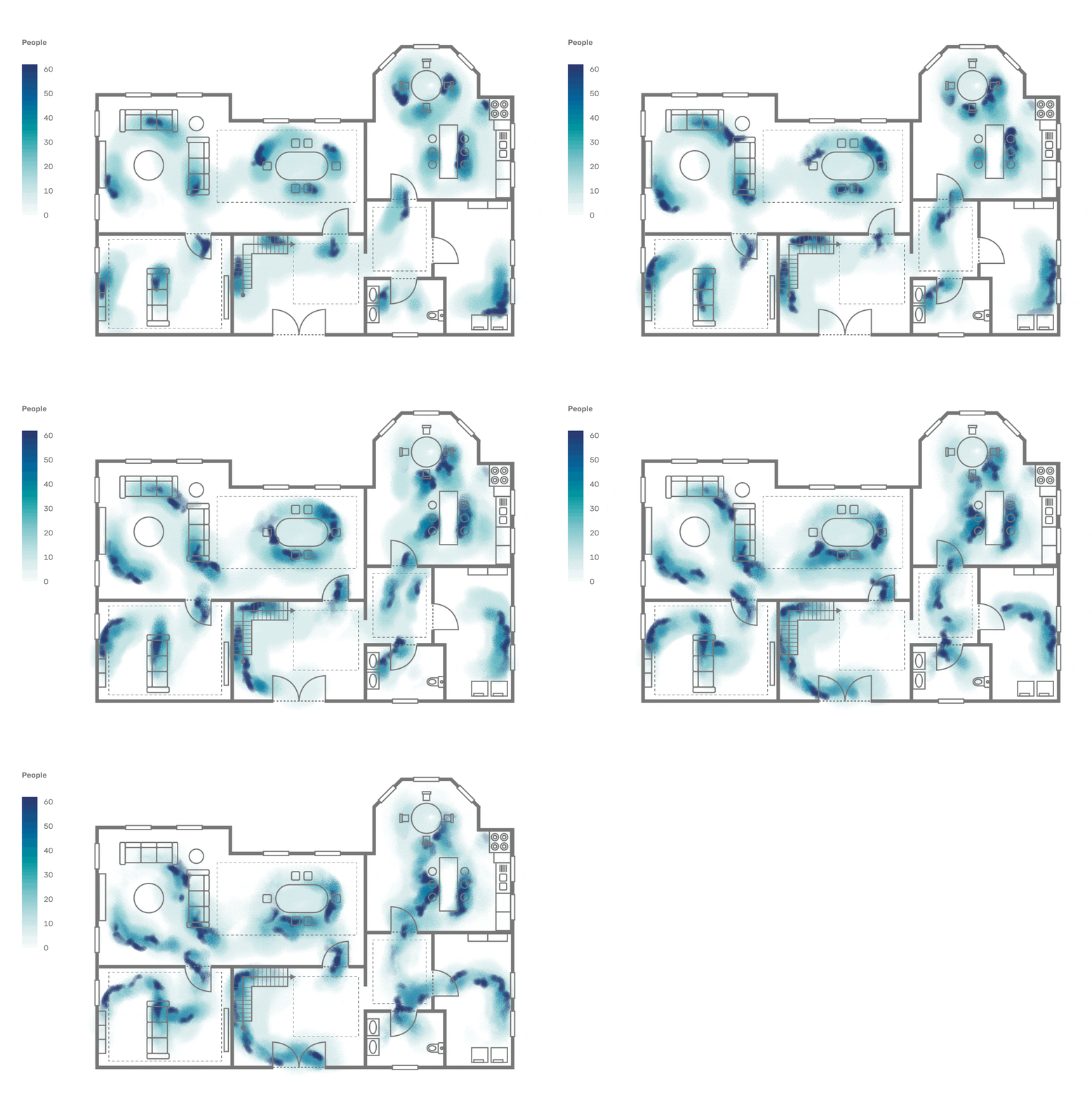
How do people move through urban spaces? And how can we improve flow management in public spaces, events, or commercial environments without collecting personal data? At the demonstration area of RomeCup 2026, scheduled to take place in Rome from April 28 to 30, startups and innovators will present prototypes and solutions based on data analysis to make cities and shared spaces more efficient, safe, and sustainable.
RomeCup, the multi-event promoted by the Fondazione Mondo Digitale ETS and titled this year “What’s next? Intelligence and talent in dialogue,” explores the future of education, research, and business through dialogue between the humanities and computational sciences, with a focus on augmented languages.
In the event’s demonstration area, research and entrepreneurship come together in concrete prototypes that show how digital technologies can support new forms of urban space management.
This is where the startup Dropper fits in, presenting Dropper mini, a compact device designed to analyze foot traffic immediately and in a privacy-respecting manner.
The system is the first battery-powered, plug-and-play Edge AI device capable of measuring foot traffic, direction of movement, and dwell time in real time. Unlike many traditional monitoring systems, Dropper mini does not collect personal data or identifiable images; instead, it analyzes anonymous signals to generate metrics useful for space management.
The collected data is transformed into KPIs that can be viewed via a cloud dashboard and integrated via API with other digital systems. This allows event organizers, public space managers, and commercial entities to monitor foot traffic trends in real time and make more informed decisions regarding safety, organization, and services.
Through prototypes like this one, the RomeCup demonstration area shows how data analysis, artificial intelligence, and privacy can coexist in the development of new solutions for cities. Technologies that help better understand people’s movements and design smarter, more sustainable urban spaces.