
Students at the Gullace High School prepare for the TirBOT creative contest
On 26 March, the final meeting of the school-work training programme for the DIGA project took place at the Palestra dell’Innovazione of the Fondazione Mondo Digitale, together with third-year students from the Teresa Gullace Talotta High School in Rome, a school led by headteacher Elisabetta Emanuele. Over the past few weeks, the students have worked with enthusiasm and determination to prepare for the RomeCup creative contests, the event that brings schools and universities together to devise innovative robotic solutions.
As project manager Cecilia Borzese emphasises: “STEM skills become a concrete tool for empowerment when they help young people not only to ‘know’, but above all to ‘know how to do’ and ‘know how to choose’, making them active, aware and protagonists of their own personal and professional journey”.
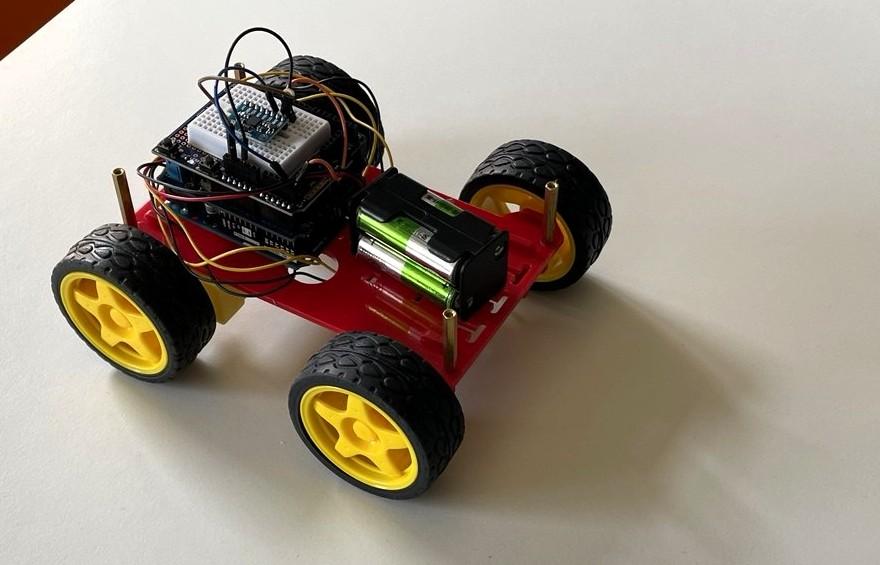
During the training activities, the students developed a prototype for collision detection, designed to automatically recognise a car accident and send a distress call with GPS coordinates. An ambitious idea, born from a simple toy car and transformed, step by step, into a smart device thanks to the group’s creativity and collaboration.
On the final day, the students split into teams, led by trainers Emanuele Coletta and Davide Belli.
- Emanuele supervised the group dedicated to programming, working on sensors, the accelerometer, the GPS module and the display for showing the coordinates. Meanwhile, other students worked on the slides and structure of the elevator pitch they will present at RomeCup.
- Davide, on the other hand, supported the students engaged in the more hands-on and design-oriented aspects: modelling the body and components using software such as Tinkercad. The body was then produced using 3D printing, along with a base that allows all the electronic components to be securely fixed in place.
The RomeCup creative contests offer the students a valuable opportunity to present their project as part of TirBOT, dedicated to applications for autonomous vehicles: from road safety to smart roads, right through to intelligent transport systems.
The training programme concluded in an atmosphere of great enthusiasm and curiosity. Now all that remains is to wait and see them compete on 29 April at the RomeCup, bringing with them ideas, skills and plenty of energy.