
Made in Italy: when creativity meets craftsmanship
On the eve of National Made in Italy Day, dedicated to promoting Italian creativity and excellence, a timeless question resurfaces: what does ‘craftsmanship’ mean in Italy today? 15 April celebrates not only products and supply chains, but a culture: one that brings together craftsmanship, ingenuity, innovation and identity. A culture that evolves, transforms and regenerates itself in the most diverse contexts, from manufacturing districts to digital workshops.
With the column’s “time machine”, we go back more than ten years, to when the The Italian Makers project was taking shape at the Fondazione Mondo Digitale.
It was a time when the maker movement was beginning to spread in Italy too, bringing with it a new vision: to combine the tradition of craftsmanship with digital technologies, from 3D printing to digital fabrication. Italian Makers was born precisely from this insight: ‘Made in Italy’ is not just a legacy, but the ability to reinvent itself. It is not just about the finished product, but the processes, skills and communities that make it possible.
In the workshops of the Palestra dell’Innovazione, artisans, students, designers and innovators began working together, experimenting with new modes of production. Digital technology did not replace manual skills, but amplified them. Machines did not take the place of people, but became tools for expressing creativity and design. In this convergence of craftsmanship and technology, a trajectory was already emerging that is now increasingly evident: the future of Made in Italy lies in the ability to integrate diverse skills, connect knowledge and build open ecosystems.
Among the most emblematic experiments of those years was the first smart dress created in the Foundation’s Fab Lab. A project born from the collaboration between students, makers and artisans, in partnership with Sartoria Borghetti and the Istituto A. Diaz in Rome. The dress combined materials unusual for fashion – laser-cut plexiglass and wood, jute and tulle – with hundreds of hand-sewn LED lights and optical fibre to diffuse light across the fabric. A concrete example of how technology can interact with sartorial tradition, without replacing it.
Presented at the 2014 Maker Faire as part of Italian Makers, the prototype worn by Alice came to life thanks to a programmable circuit board: the LEDs lit up to the beat of the music, transforming the dress into an interactive object. When worn, the dress follows the model’s movements on the catwalk: the lights turn on and modulate to the rhythm, whilst the dress’s structure—with its sheer panels, natural materials and technological inserts—visually captures the meeting of tailoring and innovation. It is not merely a technical demonstration, but a narrative: the body becomes an interface, the fabric an interactive surface, and fashion a technological language.
A few days after that fashion show, the Nobel Prize in Physics was awarded to the inventors of the blue LED. A detail which, almost by coincidence, makes that project even more symbolic: a dress that, in its own small way, anticipated a broader transformation, where technological innovation and creativity become part of the same language.
It is no coincidence that many of the stories that emerged in those years speak of hybridisation: artisans becoming makers, students designing objects, communities sharing knowledge. A model that transcends the distinction between training and work, between production and learning.
To revisit the Italian Makers project today, on the eve of National Made in Italy Day, is to recognise a profound continuity: Italian creativity has never been static. It has always been the capacity for adaptation, cross-pollination and innovation. And it is perhaps that luminous dress, created in a Fab Lab and worn on the catwalk by a student, that tells this story better than many speeches: an interweaving of materials, skills and visions that holds tradition and the future together. This is also the meaning of the column 25 Years Ago Today: returning to experiences that were able to anticipate change, showing how the country’s future is built by bringing together talent, technology and community.
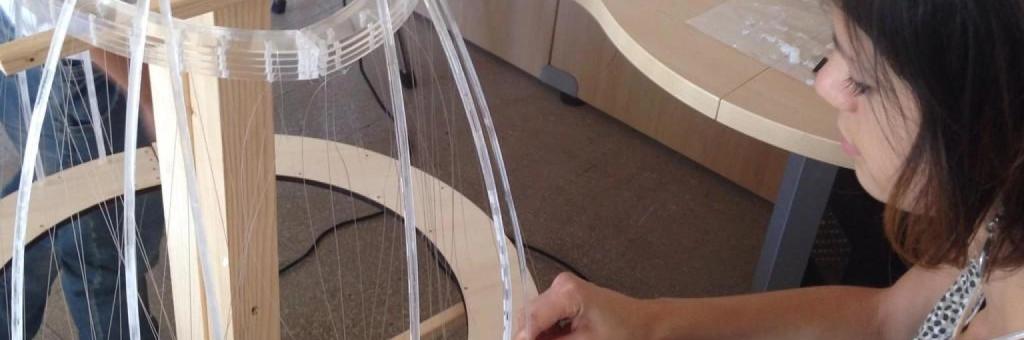
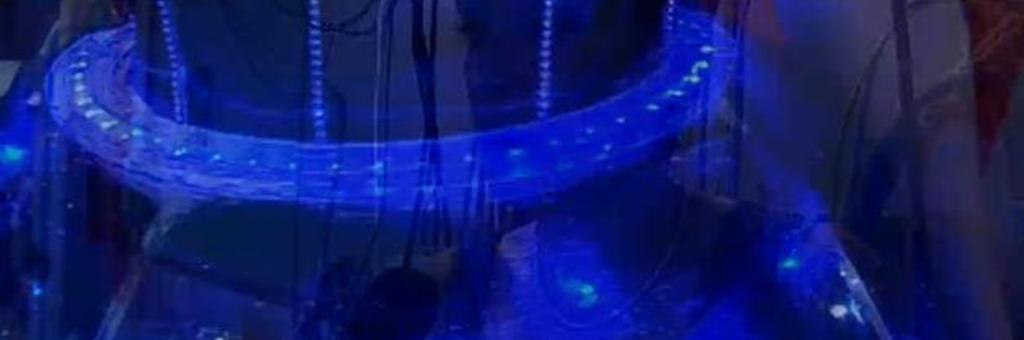
Presentato alla Maker Faire del 2014 nell’ambito di Italian Makers, il prototipo indossato da Alice prendeva vita grazie a una scheda programmabile: i Led si accendevano a ritmo di musica, trasformando l’abito in un oggetto interattivo. Quando l’abito viene indossato segue il movimento della modella in passerella: le luci si accendono e si modulano seguendo il ritmo, mentre la struttura del vestito, tra trasparenze, materiali naturali e inserti tecnologici, restituisce visivamente l’incontro tra sartoria e innovazione. Non è solo una dimostrazione tecnica, ma una narrazione: il corpo diventa interfaccia, il tessuto superficie interattiva, la moda linguaggio tecnologico.
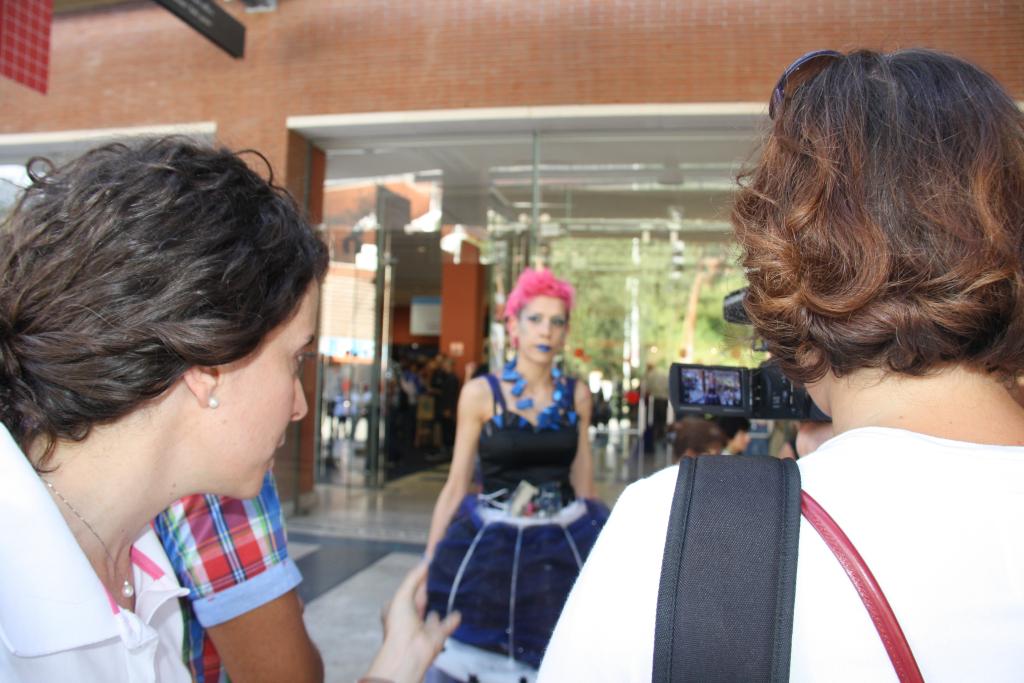
Pochi giorni dopo quella sfilata, il Premio Nobel per la Fisica veniva assegnato agli inventori dei Led blu. Un dettaglio che, quasi per coincidenza, rende ancora più simbolico quel progetto: un abito che anticipava, nel suo piccolo, una trasformazione più ampia, dove innovazione tecnologica e creatività diventano parte dello stesso linguaggio.
Non è un caso che molte delle storie nate in quegli anni parlino di ibridazione: artigiani che diventano maker, studenti che progettano oggetti, comunità che condividono conoscenze. Un modello che supera la distinzione tra formazione e lavoro, tra produzione e apprendimento.
Rileggere oggi il progetto Italian Makers alla vigilia della Giornata nazionale del Made in Italy significa riconoscere una continuità profonda: la creatività italiana non è mai stata statica. È sempre stata capacità di adattamento, contaminazione e innovazione. Ed è forse proprio quell’abito luminoso, nato in un Fab Lab e portato in passerella da una studentessa, a raccontarlo meglio di molti discorsi: un intreccio di materiali, competenze e visioni che tiene insieme tradizione e futuro. È anche questo il senso della rubrica 25 anni fa, oggi: tornare a esperienze che hanno saputo leggere il cambiamento, mostrando come il futuro del Paese si costruisce mettendo in relazione talento, tecnologia e comunità.


