
The team from IIS Vaccarini in Catania wins the RomeCup 2026 creative contest for the second year in a row
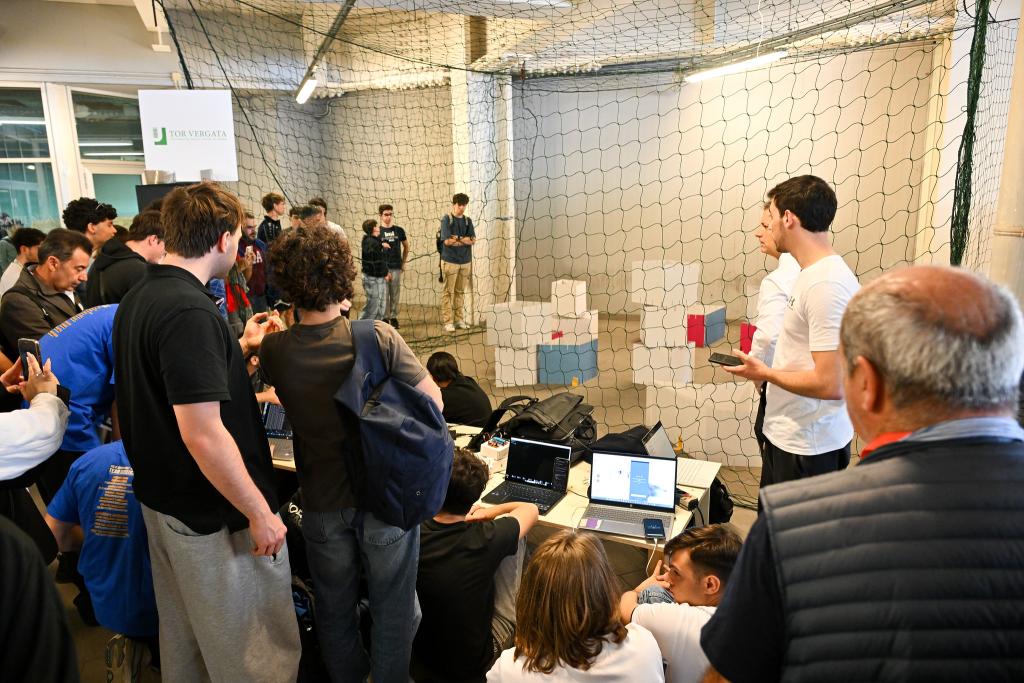
As part of the RomeCup 2026, a creative robotics contest was also held, organized in collaboration with Amazon and the University of Rome Tor Vergata, with rules specifically for the flight category. The first prize was won by RoboyCT, the project from the Giovan Battista Vaccarini High School in Catania, developed by students 4AIT Samuele Daniele Maria Ferlito and Giuseppe Vinciprova, led by Professor Leonardo Caruso. This is a significant achievement for the Catania school: the team has repeated last year’s feat and returned home with another first-place finish.
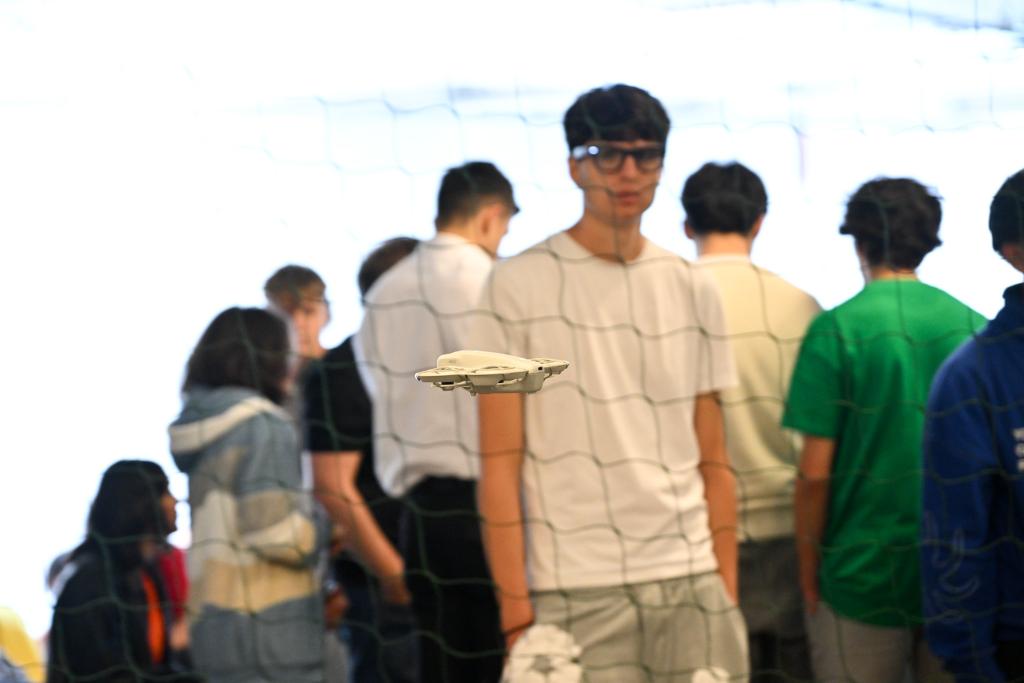
The challenge required participants to integrate skills in robotics, computer vision, and autonomous driving. “The competition involved detecting a fire using a drone and then, via autonomous driving, the rover had to reach the fire,” the students explain in a video testimonial filmed during the RomeCup. “We’re very happy to have won this second edition in a row. We thank our professor and the school for allowing us this experience, this journey.”
RoboyCT combines three elements: a drone, a rover, and an artificial intelligence model. In their project presentation, the students describe it as “the hero of the future,” capable of recognizing a threat in real time and triggering a rapid response. The system features an AI model managed locally by a computer equipped with an RTX graphics card, connected to a drone with a high-resolution camera. The goal is to recognize the danger and guide the rover’s intervention.
From a technical standpoint, the project focuses on the integration of multiple devices. The drone and the computer communicate via ADB wireless connectivity, using a Wi-Fi access point as a bridge. The rover, on the other hand, is connected to the computer via two Bluetooth modules in master-slave mode, interfaced by two Arduino boards: one on board the rover and one connected to the PC. An Aruco Marker positioned on the rover allows the drone to recognize it and send directional commands to the computer, which in turn transmits the data to the rover via the Bluetooth module.
The strength of the project lies precisely in the cooperation between different systems: the drone observes from above, artificial intelligence interprets the images, and the rover intervenes on the ground. A small distributed robotic architecture that simulates real-world intervention scenarios in complex environments, where rapid detection and precise movement can make all the difference.
The jury also awarded a special mention for design to the Arangio Ruiz High School in Rome, recognizing the overall quality of the prototypes in the competition and the schools’ ability to tackle advanced technological challenges.
“This category asks students to think systemically,” emphasizes Eleonora Curatola, coordinator of the creative robotics contests. “It’s not enough to fly a drone or move a rover: you have to build an intelligent relationship between perception, analysis, and action. RoboyCT is interesting because it shows how high school students can work on a complete technological chain, from image acquisition to the robot’s autonomous response.”
With RoboyCT, RomeCup 2026 showcases a young, practical, and problem-solving-oriented approach to robotics. A project born in the classroom, grown thanks to the guidance of teachers and collaboration with universities and companies, which shows how innovation can become a training ground for skills: computer vision, programming, electronics, teamwork, and the ability to transform a challenge into a working prototype.