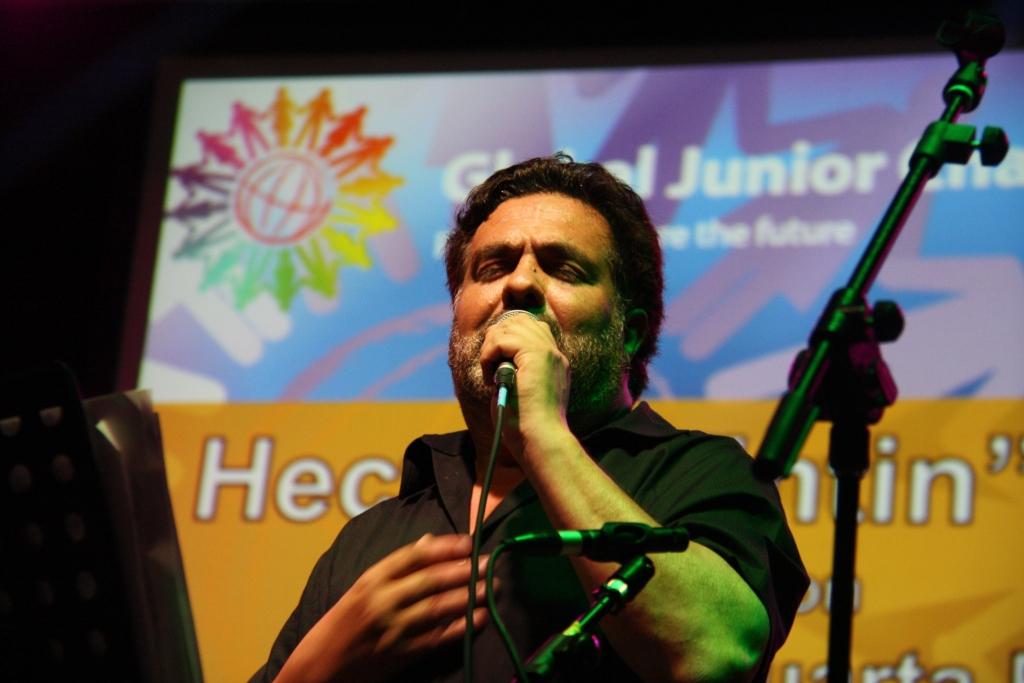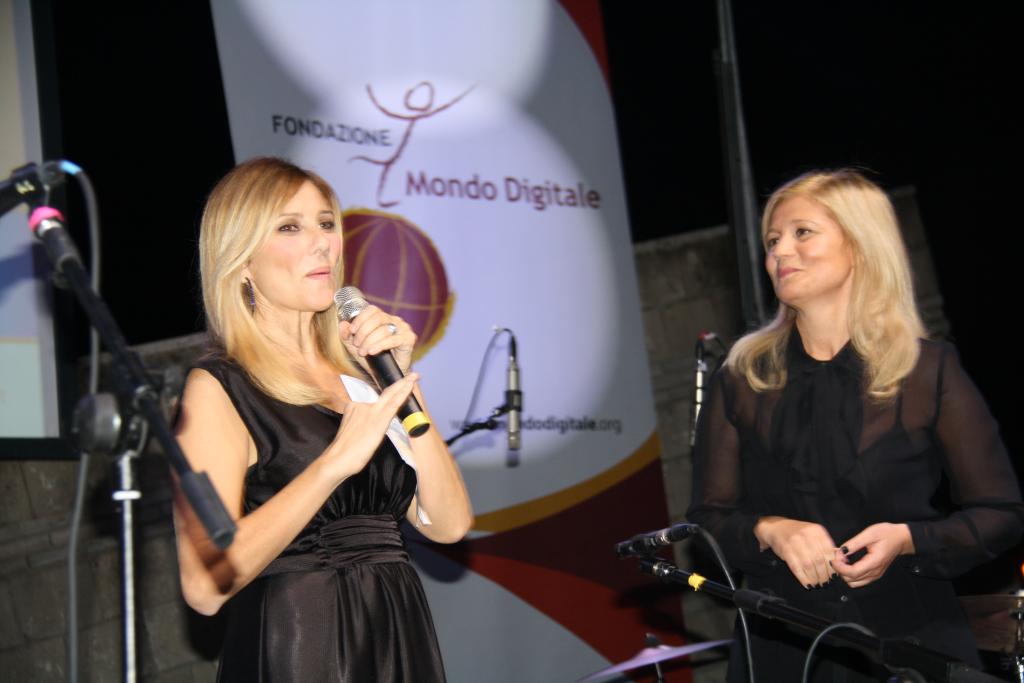

It's not the Sanremo stage... but how exciting to see “Il mondo in piazza”!
Tonight, millions of eyes will be glued to the television to follow the 76th edition of the Sanremo Festival (24-28 February). Between songs, we offer you a brief leap back in time. Because the Fondazione Mondo Digitale also has its own musical history. A different kind of festival, without Ariston, but with a stage as big as the world.
It was 2012. We wanted to conclude the sixth edition of the Global Junior Challenge with an unforgettable evening, worthy of the stories that had arrived in Rome from all over the planet. From 17 to 19 October, Rome became the capital of ICT for global education and e-inclusion. Three locations (Don Gioacchino Rey Primary School, Città Educativa and Campidoglio) hosted exhibitions, cooperation workshops, international networking with 19 countries in comparison, debates (the inaugural one with Tullio De Mauro)...
So on 18 October, in Piazza Vittorio Emanuele II, the largest square in the capital, we organised a musical evening open to the city: “Il mondo in piazza” (The world in the square).
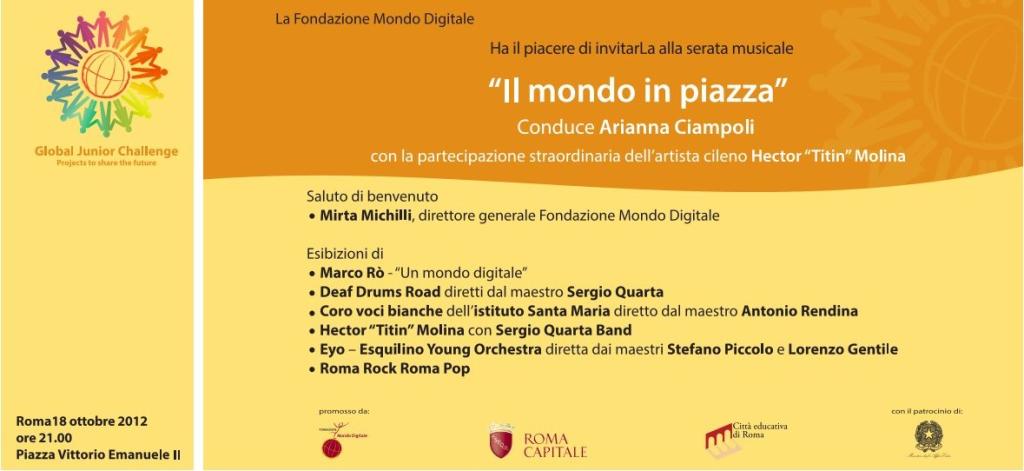
A global festival of 21st-century education
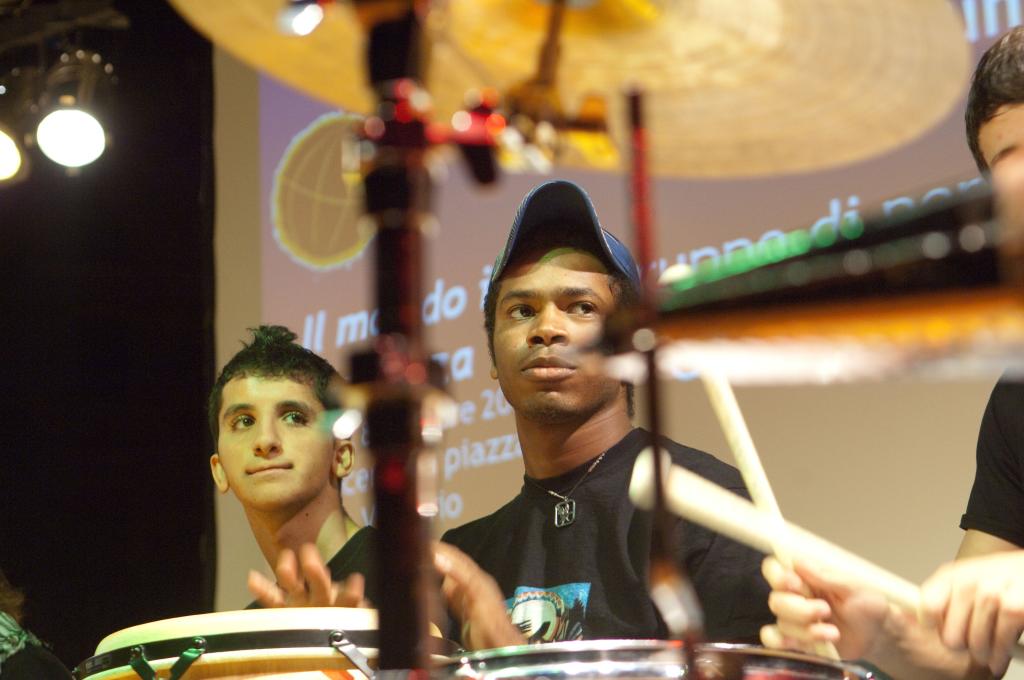
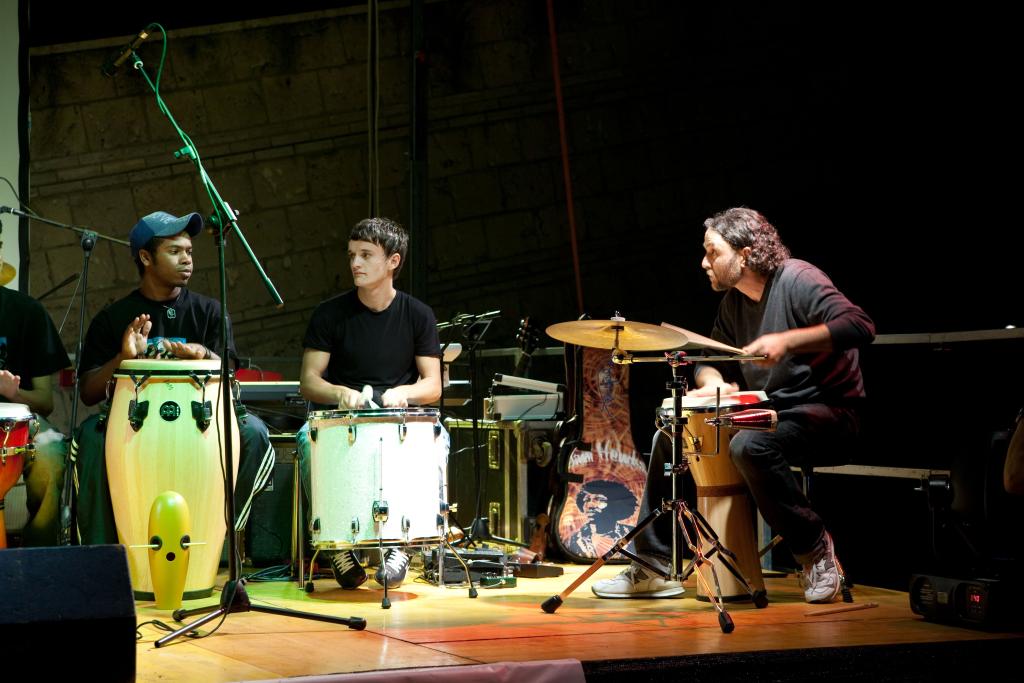
Among the artists who took to the stage in Piazza Vittorio were Deaf Drums Road. Twenty-five young people from the capital's boarding school for the deaf, led by maestro Sergio Quarta. Percussionists who cannot hear the music, but play it. The workshop, unique in Italy, was born from a simple and powerful intuition: a deaf person, when walking, spontaneously reproduces a regular rhythmic sequence. Each step corresponds to a beat. This is how rhythm is created, transforming movement into shared vibration. ‘One of the tasks of every musician is to bring music where there is none,’ explained Sergio Quarta. ‘I realised that the furthest place to take it was just a few kilometres from my home.’
From an initial six young people, the workshop has grown to involve twenty-five. It is not just about music, but relationships, group identity. The young people call themselves “brothers”, children of the same mother: music. On that evening in 2012, they performed in front of an audience for the first time.
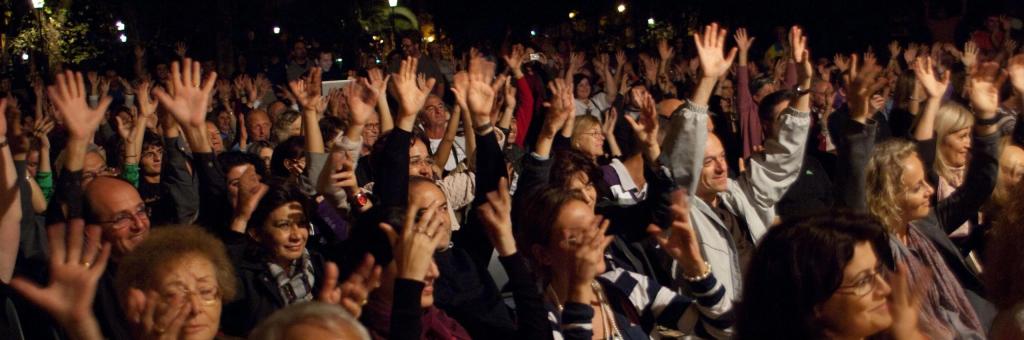
The young musicians paid tribute to Ludwig van Beethoven by playing his Ninth Symphony, one of the most famous works in classical music. Beethoven composed it when he was completely deaf. The delighted and surprised audience thanked them, not with applause, but in sign language, raising their hands high.
Language and citizenship
During the evenings of the Sanremo Festival, when we see songs performed in Italian Sign Language (LIS) – now permanently integrated through Rai Pubblica Utilità, with deaf and hearing performers translating rhythm and emotions into artistic and musical LIS – let us remember that this too is the result of a long cultural journey. The recognition of LIS as a language in its own right has been supported by scholars and intellectuals who have defended the dignity of every language as a tool for participation. Among them was our president Tullio De Mauro (Torre Annunziata, 1932 - Rome, 2017), a great scholar of the Constitution, of literature on sign languages and a “friend of the deaf”. It was only on 19 May 2021, with the approval of Article 34-ter of the Sostegni Decree, that Italy officially recognised, promoted and protected Italian Sign Language (LIS) and Italian Tactile Sign Language (LIST). This historic milestone guarantees the inclusion of people with hearing disabilities, facilitates access to public services and recognises the professional role of LIS/LIST interpreters.
Our stage is not the Ariston. It is the world!
The special concert of “inclusive” music also featured evocative influences from more distant sounds, thanks to the extraordinary participation of Chilean artist Hector “Titin” Molina, champion and supporter of a forgotten people, the Mapuche. They are the Amerindian inhabitants of central and southern Chile and southern Argentina. A people who today are forced into resistance because they are unable to live as they have always chosen to live, tied to the land, to agriculture and to strong family ties.