
The winners of Health Bot, the contest to design artificial intelligence solutions for healthcare, were awarded at RomeCup
At Sapienza University of Rome, as part of RomeCup 2026, the third edition of Health Bot has come to a close. This educational contest involves secondary school students in the design and prototyping of artificial intelligence solutions for healthcare. An experimental workshop where young people’s ideas are transformed into prototypes, bringing together AI, sensor technology and precision technologies to explore new models of care that are more predictive, accessible and person-centred.
The competition forms part of the The Future of Care project, organised by the Fondazione Mondo Digitale in partnership with Johnson & Johnson and Microsoft Italia, to promote training and innovation in the healthcare sector.
In recent years, artificial intelligence has been profoundly redefining the world of healthcare: a transformation which, alongside opportunities, poses new challenges linked to ethics, inclusion and the centrality of the individual. In this context, the training of the younger generation becomes a decisive factor in building truly sustainable innovation. Health Bot was created precisely with this objective in mind: to offer young people a guided space for ideation, experimentation and project responsibility.
During the school year, the teams worked on prototypes capable of integrating predictive algorithms, sensor technology, robotics, wearables and computer vision. The challenges addressed include mobility support for people with disabilities, treatment adherence, psychological well-being, doctor-patient communication and the monitoring of vital signs.
The winners of the third edition
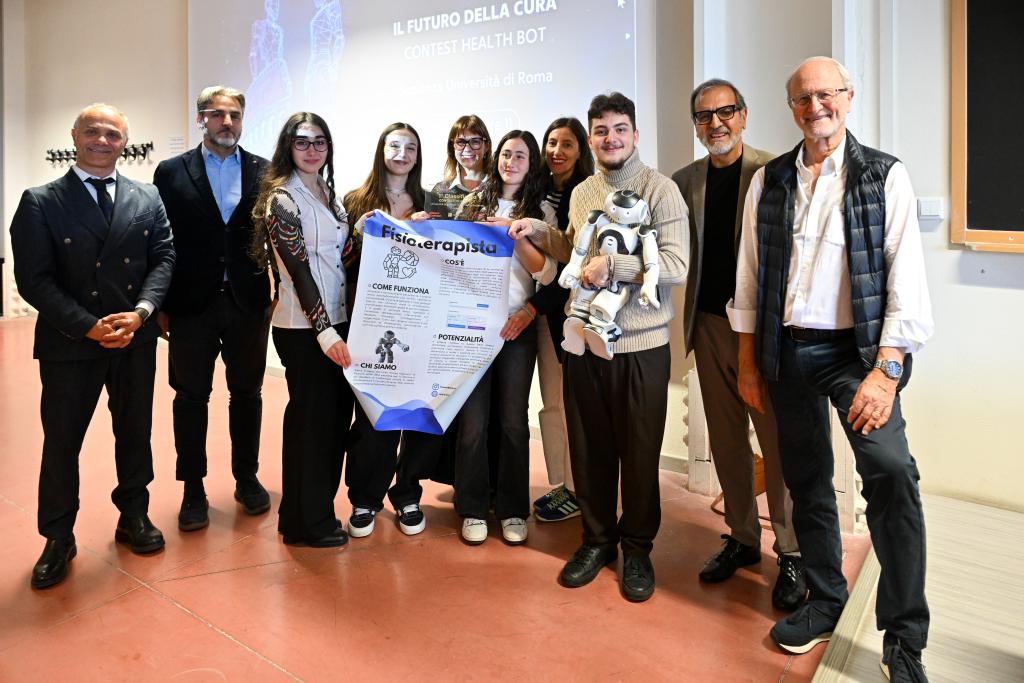
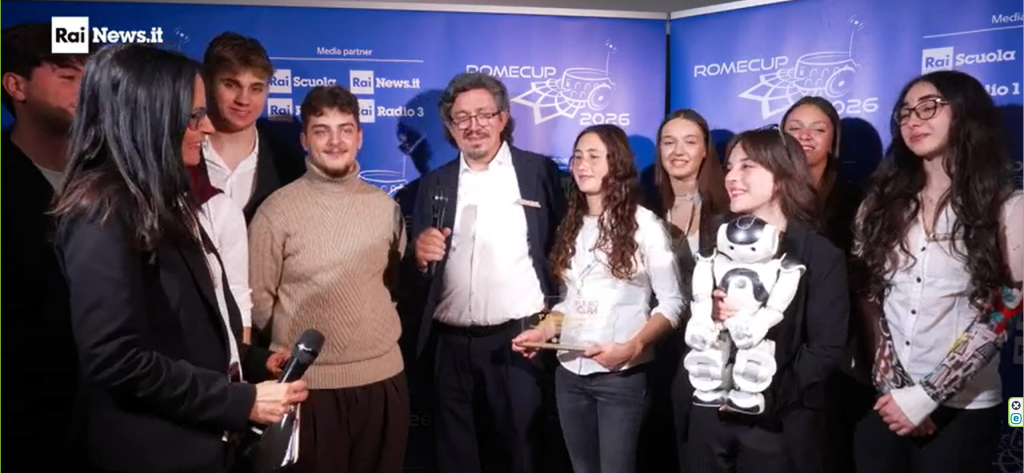
Taking first place was the team from the Liceo Scientifico Ettore Majorana in Pozzuoli, in the province of Naples, with Fisiobot, the Nao Physiotherapist. The project uses a humanoid robot to support upper limb rehabilitation, assisting the physiotherapist during sessions. The system guides the patient through movements via physical and empathetic interaction, with programmable and repeatable exercises that encourage engagement and continuity in the rehabilitation process.
[watch the Rai News interview]
Second place went to the Vito Volterra State Scientific High School in Ciampino, in the province of Rome, with Sense Core, a wearable glove designed to support blind people in their daily activities. The device uses a ToF laser sensor to detect the distance to obstacles and provide tactile feedback to the user. It also incorporates an emergency signal function and can be expanded with navigation modules to facilitate spatial orientation.
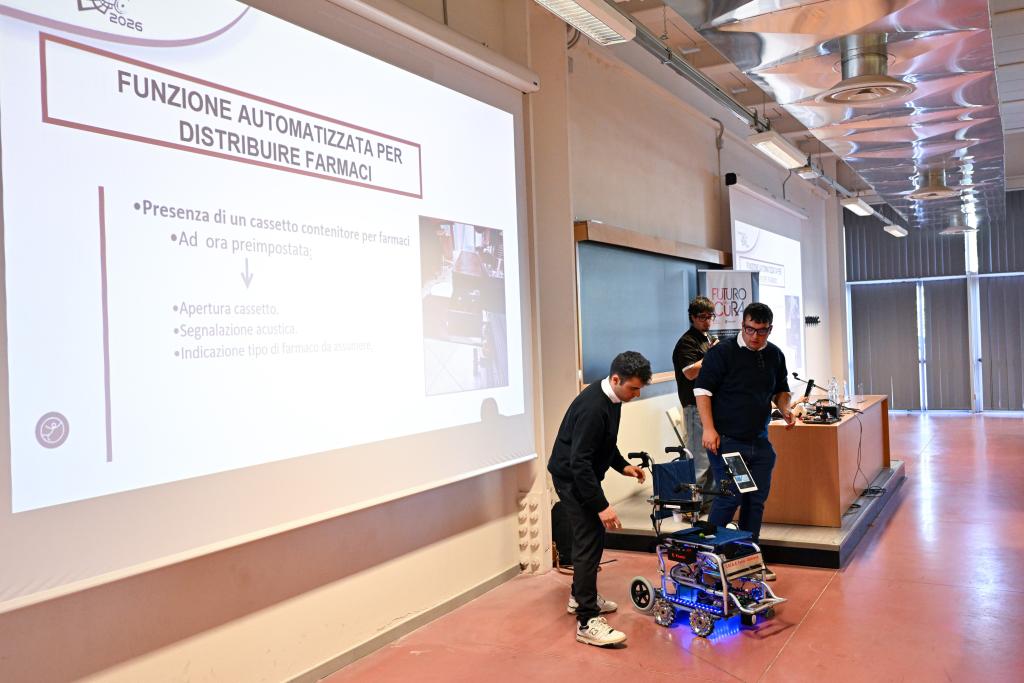
In third place was the ISIS Fermi in Bibbiena, in the province of Arezzo, with The Smart Wheelchair, an electric wheelchair equipped with the latest generation of Mecanum wheels, designed to ensure high manoeuvrability even in confined spaces. The system allows for multi-directional movement in complex domestic environments and is equipped with smart sensors to monitor the environment and the user’s safety, with the option to send alarm alerts to pre-set contacts.
The winning teams were selected by a jury of experts for originality, social impact, team cohesion and their ability to communicate a credible and innovative vision for the future of care.
For Mirta Michilli, Director General of the Fondazione Mondo Digitale, the contest demonstrates in a tangible way the educational value of artificial intelligence when incorporated into a guided learning pathway: "The Health Bot contest demonstrates very clearly how artificial intelligence can become a powerful learning environment if placed in the hands of young people with educational, ethical and design-oriented guidance. The students involved did not merely imagine technological applications for healthcare: they observed real needs, worked on accessibility, prevention, psychological well-being, treatment adherence, the autonomy of vulnerable people and the quality of the care relationship.‘
’It is precisely from this ability to combine scientific expertise, social awareness and responsibility that truly person-centred innovation can emerge," adds Michilli. "With The Future of Care, together with Johnson & Johnson and Microsoft Italy, we want to help train professionals and citizens capable of understanding the transformations underway and managing them with awareness. Healthcare is one of the areas where artificial intelligence can have the greatest impact, but also one of the contexts where greater attention, transparency and trust are needed. This is why it is essential to start with schools: because the future of healthcare depends not only on the technologies we will be able to develop, but on the skills, values and vision of the younger generations".
With Health Bot, RomeCup reaffirms its role as an educational and technological laboratory: a place where innovation is not merely presented as a scientific frontier, but experienced as a collective responsibility, starting with the perspective and talent of the younger generations.